01
What the channel is
Institutional foodservice operations within elementary, middle, and high schools that provide daily meals to students under regulated nutrition guidelines.
 K-12 cafeteria channel
Institutional foodservice · K-12 cafeteria channel
SchoolCafeterias.org complements existing school trade associations by introducing new opportunities for startup and emerging brands to access K-12 cafeteria programs — one of the most consistent, high-volume foodservice channels in the country.
The fundamentals
K-12 cafeterias are an institutional foodservice channel with their own regulatory frame, buying motion, and menu cadence. Brands that treat them like grocery overshoot; brands that learn the frame compound shelf life across districts.
Institutional foodservice operations within elementary, middle, and high schools that provide daily meals to students under regulated nutrition guidelines.
One of the most consistent, high-volume foodservice channels in the country — a structured platform for approved products, menu integration, and long-term brand exposure.
Startup and emerging brands seeking durable, recurring volume outside crowded retail shelves — and districts looking to broaden the approved-product field beyond legacy suppliers.
Through nutrition-guideline approval, menu integration cycles, and the existing school trade association ecosystem this site complements.
School cafeterias are not a side door into foodservice — they are a structured, daily-volume platform where approved products earn long-term menu integration and durable brand exposure with the next generation of consumers.
SchoolCafeterias.org curriculum · K-12 channel access
By the numbers
In practice
Most cafeteria-channel access falls into five paths. Knowing which path fits a brand's product, scale, and approval status sets the realistic timeline.
Where brands enter
Most cafeteria-channel access falls into five paths. Knowing which path fits a brand's product, scale, and approval status sets the realistic timeline.
The first gate. Products are evaluated against the regulated nutrition guidelines that govern daily school meals before any menu conversation begins.
Approved products earn placement during scheduled menu integration windows — the rotating cycles that determine what students see on the line.
Direct conversations with district foodservice directors who set product priorities for elementary, middle, and high school programs.
SchoolCafeterias.org complements existing school trade associations rather than replacing them — pairing with the established association ecosystem.
Once integrated, products gain daily-volume exposure across years of student meals — a structurally different shelf-life than promotional retail placement.
Curriculum coverage
SchoolCafeterias.org is the access and education layer — it complements existing school trade associations and translates a structured institutional channel into a path emerging brands can actually walk.
The standards every K-12 meal program operates under — the layer that determines whether a product is even eligible to be evaluated.
Formal approval as a product the district can purchase — the gate between an emerging brand and the menu line.
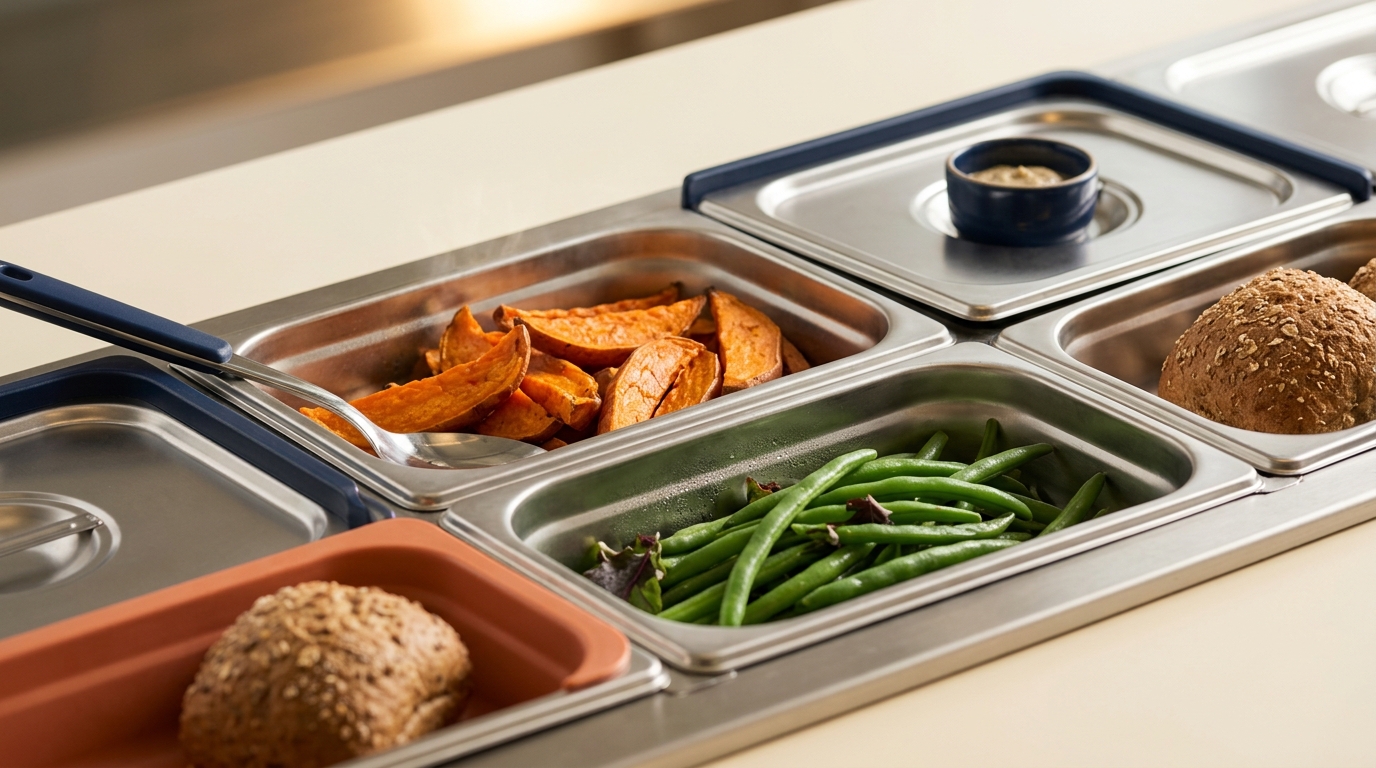
Placement on rotating elementary, middle, and high school menus — where approved products become daily volume.
Recurring tray-line presence across school years — the structural payoff that makes the channel worth pursuing.
Practical process
Read the nutrition guidelines that govern K-12 meal programs. Identify which product specs need adjustment before any approval conversation begins.
Submit through the appropriate approval workflow. Track requirements by elementary, middle, and high school program scope.
Build relationships with district foodservice directors who set menu priorities. Lead with structural fit, not promotional pitch.
Time outreach to the rotating menu integration windows. Approved products that miss the cycle wait until the next one.
Once on the menu, the work shifts to consistency, supply reliability, and renewal across school years — the engine of long-term brand exposure.
Network links
Civic and institutional touchpoints brands use to understand community-anchored channels parallel to school programs.
VisitAnother community-anchored institutional footprint — useful framing for brands learning to operate in regulated, public-facing channels.
VisitSpecialty foodservice channel reference — a sister format that helps brands compare a tight specialty channel to the cafeteria channel's structured volume.
VisitThe master network this site sits within — the broader catalog of institutional and specialty retail formats.
VisitGet into the channel
Send your product specs, current approval status, target districts or program tier, and any existing trade-association relationships. The curriculum team returns a regulatory-fit read, an approval-path map, and a menu-integration timing view.
Email the curriculum team